Ventilation assessment
We assess the house as built — its tightness, its existing ductwork, its moisture sources and its occupancy — against the ASHRAE 62.2 approach, so the system is sized to the house rather than to a catalogue.
Fort Collins builds tight homes now — well insulated, well sealed, and efficient. The trade-off is that a tight home does not breathe on its own: cooking moisture, cleaning chemicals, radon, and the carbon dioxide of simply living in it all accumulate, and the house feels stale even when the temperature is right. Ventilation is the deliberate answer: controlled fresh air, brought in and exhausted in balance, with heat recovery so winter air does not mean winter heating bills. DNA Refrigeration Heating & Cooling installs and services ventilation across Fort Collins. Call (970) 932-2324 any time.
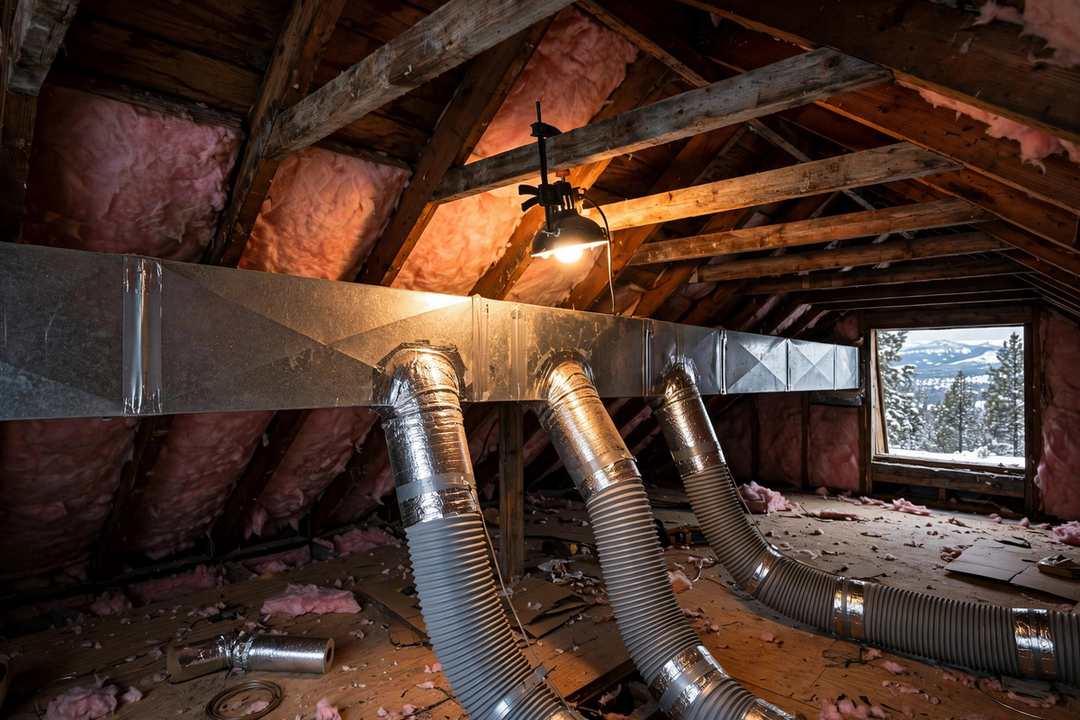
Ventilation is controlled air exchange: stale indoor air exhausted, fresh outdoor air brought in, in balance, through a system designed for the house. It is not opening a window, and it is not a bigger furnace fan — it is a separate function with its own equipment, ducting and controls.
The Fort Collins case is driven by how the housing stock has changed. Newer homes in the south of the city — Harmony Corridor, Rigden Farm, the 2000s subdivisions — are tight by design, and the ASHRAE 62.2 approach to residential ventilation is the standard those homes are measured against. Older homes have the opposite problem: they leak air through every crack, which ventilates them by accident and wastes energy at the same time. Both need a deliberate answer, but it is a different answer in each case. In a tight home, a heat-recovery ventilator (HRV) or energy-recovery ventilator (ERV) exchanges heat — and, in the ERV's case, moisture — between the outgoing and incoming air streams, so fresh air in January does not mean heating January air from scratch. In a leaky older home, the first step is often air sealing and duct sealing, so the ventilation system is ventilating the house rather than the attic. And ventilation is not a radon fix on its own: Larimer County averages 7.8 pCi/L, and radon needs testing and mitigation as its own job — ventilation helps the air, it does not remove radon.
A ventilation system should make the house feel fresh without draughts, noise or wasted heat. Here is what goes into that.
We assess the house as built — its tightness, its existing ductwork, its moisture sources and its occupancy — against the ASHRAE 62.2 approach, so the system is sized to the house rather than to a catalogue.
A heat-recovery ventilator exchanges heat between outgoing stale air and incoming fresh air, so winter ventilation does not mean heating cold air from scratch. The right call for most Fort Collins homes, where winters are long and dry.
An energy-recovery ventilator exchanges moisture as well as heat, which suits homes where summer humidity or winter dryness needs managing alongside fresh air. We explain the HRV-versus-ERV choice for your house rather than defaulting to one.
Spot exhaust that actually exhausts — ducted to the outside, not into the attic — is part of a ventilation system, not a separate afterthought. Cooking moisture and bathroom steam are the two largest indoor moisture sources in a tight home.
Ventilation ducting is run and balanced so fresh air reaches the bedrooms and living spaces and stale air is drawn from the kitchens and bathrooms, at the designed rates, without noise.
A ventilation system needs controls that fit the house: continuous low-speed operation with a boost for cooking and showers, or a smart control tied to occupancy and humidity. We set it up so it runs without daily attention.
Call (970) 932-2324 any time. Tell us what the house feels like — stale, stuffy, damp windows, cooking smells that linger — and we will ask about the house's age, tightness and existing ductwork.
We look at the house, the heating and cooling system, the ductwork and the existing exhausts, and assess ventilation against the ASHRAE 62.2 approach for the house as built.
You get a written quote naming the system type — HRV or ERV — the ducting scope and the controls, with the choice explained for your house.
The unit is fitted, ducted and wired, the system is balanced to its designed airflows, and the controls are set up and explained.
We show you the controls, the filter and the core maintenance, and leave a written schedule so the system keeps working without daily attention.
Call (970) 932-2324 any time. Tell us what the house feels like — stale, stuffy, damp windows, cooking smells that linger — and we will ask about the house's age, tightness and existing ductwork.
Ventilation airflows measured and balanced to the designed rates for each room.
Ventilation ducting designed for the house and tested so fresh air reaches the rooms instead of leaking away.
Heat-recovery and energy-recovery ventilators matched to the house's size, tightness and moisture profile.
Indoor humidity measured so the HRV-versus-ERV choice is based on your house rather than a default.
Bathroom and kitchen exhausts checked for proper ducting to the outside and adequate airflow.
Controls set up and commissioned, with boost functions for cooking and showers verified.
Large, tight two-storey homes along Harmony Corridor are well sealed against the outside, which is good for energy and hard on air quality: cooking moisture, cleaning chemicals and carbon dioxide accumulate, and the house feels stale even at the right temperature.
What good work addresses: a ventilation assessment against the ASHRAE 62.2 approach, then an HRV or ERV that brings in controlled fresh air with heat recovery, so January air does not mean January heating bills.
Call (970) 932-2324 →Old Town's pre-1930 homes leak air through every crack, which ventilates them by accident and wastes energy at the same time — yet the bedrooms can still feel stuffy, because the leakage is uncontrolled and the ductwork was retrofitted decades ago.
What good work addresses: air sealing and duct sealing first, so the house is ventilated deliberately rather than by accident, then a ventilation system sized to the house as it actually is after sealing.
Call (970) 932-2324 →Student rentals around Campus West see heavy cooking, frequent showers and high occupancy, and the bathroom and kitchen exhausts are often the original builder-grade units — noisy, weak, and sometimes ducted nowhere useful.
What good work addresses: proper spot exhaust ducted to the outside, plus a ventilation assessment for the house as a whole, so moisture and odours leave the house instead of condensing on windows and feeding mould.
Call (970) 932-2324 →Ventilation is the least understood part of indoor air quality. These are the questions that clear it up.
Ask a pro →Probably not. A furnace heats air; it does not replace it. A tight home needs deliberate ventilation — controlled fresh air in, stale air out, in balance — and that is a separate system from heating and cooling.
Both recover heat from outgoing air. An ERV also transfers moisture, which suits homes where summer humidity or winter dryness needs managing alongside fresh air. In dry Fort Collins winters, the HRV is the usual call; the choice depends on your house.
A heat-recovery ventilator is designed to prevent exactly that: it transfers heat from the outgoing air to the incoming air, so fresh air in January does not mean heating January air from scratch. Uncontrolled leakage costs far more than controlled ventilation.
No. Larimer County averages 7.8 pCi/L against the EPA action level of 4 pCi/L, and radon needs testing and mitigation as its own job. Ventilation improves the air; it does not remove radon.
“We had a great experience working with this company. From the beginning, they have been incredibly open and helpful. They took the time to explain everything clearly, answer our questions, and genuinely work with us rather than simply trying to sell us a service. We really appreciate the effort they put into helping us find the best option for our situation. Highly recommend!!”
Hannah ClarkGoogle review · a month ago
“Professional,reliable, honest, and friendly service. Owner operator was top level with his knowledge and skill. Dennis runs a solid business that I most definitely highly recommend.”
Peter AmbroseGoogle review · 9 months ago
Controlled air exchange: stale indoor air exhausted and fresh outdoor air brought in, in balance, through a designed system — usually an HRV or ERV. It is not opening a window and it is not a bigger furnace fan; it is a separate function with its own equipment, ducting and controls.
Yes. Newer homes are tight by design, and a tight home does not breathe on its own. The ASHRAE 62.2 approach is the standard for residential ventilation in these homes, and an HRV or ERV is the usual way to meet it without wasting heat.
Both recover heat from outgoing air. An ERV also transfers moisture between the air streams, which suits homes where humidity needs managing alongside fresh air. In dry Fort Collins winters the HRV is the usual call; the choice depends on your house.
Ventilation dilutes indoor pollutants, but it does not remove radon — Larimer County averages 7.8 pCi/L and radon needs testing and mitigation as its own job. For smoke, filtration (MERV 13 or HEPA plus activated carbon) is the answer; ventilation brings in outdoor air, so during a smoke event it should be reduced and filtration relied on instead.
Tell us how the house feels — stale, stuffy, damp — and we will assess it, explain the HRV-versus-ERV choice for your home, and quote the ventilation in writing. Open 24 hours, 7 days a week.
Call (970) 932-2324 →Call (970) 932-2324 any time, day or night. We are open 24 hours, 7 days a week, from 2757 Sternwheeler Dr, Fort Collins, CO 80524. Phone is the way to reach us — there is no email address for the business, so call any time, day or night — we are open 24 hours, 7 days a week.