Whole-home dehumidification for the damp pockets of a dry city

Dehumidifier Installation in Fort Collins, CO

Fort Collins is a dry city, and most homes here need humidification, not dehumidification. But dry cities have damp pockets: basements, crawlspaces, creek-adjacent homes along Spring Creek and the Poudre, lakefront properties at Terry Lake, and any house where a condensate drain, a sump or a grading problem keeps one level damp while the rest of the house is dry. A portable dehumidifier in a basement is a bucket that fills daily; a whole-home dehumidifier, tied into the ductwork and drained properly, holds that level dry without daily attention. DNA Refrigeration Heating & Cooling installs whole-home dehumidifiers across Fort Collins. Call (970) 932-2324 any time.

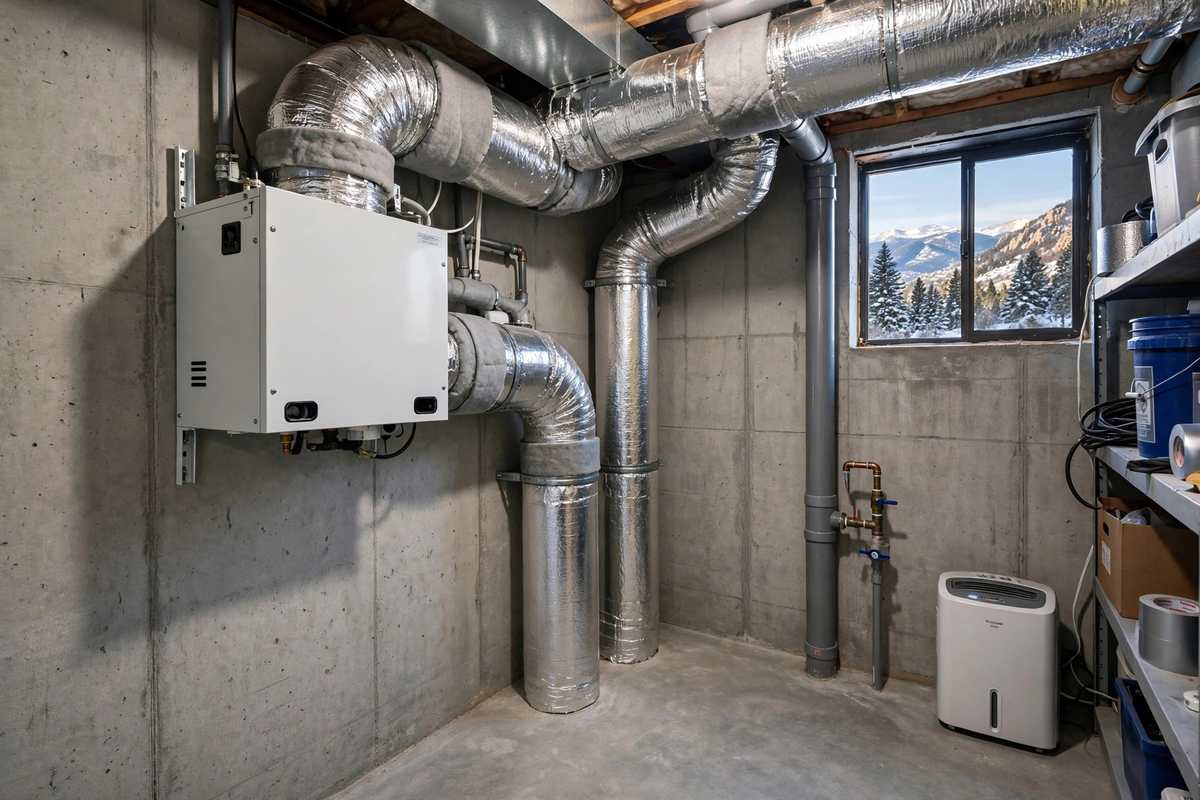
Dehumidifier installation in Fort Collins: whole-home dehumidifier installed in a basement mechanical room
For the damp pockets of a dry city — basements, crawlspaces, creek homes.
About this service

What dehumidifier installation in Fort Collins really involves

A whole-home dehumidifier is fitted into the ductwork or as a standalone ducted unit serving the damp level, with a condensate drain to a proper discharge point and a humidistat that controls it from the space it serves. It removes moisture from the air the system moves, and it does it continuously, without a bucket to empty.

The honest framing matters here, because the local moisture story is dry air, not damp air. Fort Collins has a design wet bulb of about 60°F and very low latent load; winter indoor humidity commonly runs 15–25% against a 30–50% target, and whole-home humidification is the genuine local topic. Dehumidification is the exception, not the rule — and it is worth naming where the exception applies. Basements and crawlspaces are the first case: below-grade spaces stay cooler and damper than the rest of the house, and a damp basement grows mould and musty odour even in a dry climate. Creek and lakefront homes are the second: properties near Spring Creek, the Poudre River and Terry Lake sit closer to water and higher local humidity than the rest of the city. The third is a house with a water problem masquerading as a humidity problem — a leaking condensate drain, a failed sump, poor grading — where the dehumidifier treats the symptom and the leak still needs fixing. A proper assessment separates those three before any equipment is quoted, and no price figure is published on this page because no 2026 cost guide for whole-home dehumidifier installation was found in the November 2026 research.

  • ✓ For damp basements, crawlspaces and creek-adjacent homes
  • ✓ Ducted, drained — no bucket to empty
  • ✓ Water problems separated from humidity problems
  • ✓ Open 24 hours — call any time, day or night
What's included

What our dehumidifier installation includes

A dehumidifier should hold the damp level dry without daily attention and without hiding a leak. Here is what goes into that.

01
✓

The right assessment first

We measure humidity in the damp space and in the rest of the house, and we look for the cause: below-grade damp, creek or lakefront exposure, or a water problem such as a leaking drain or failed sump. A dehumidifier is quoted only where dehumidification is actually the answer.

02
✓

Ducted, not portable

A whole-home unit ties into the ductwork or serves the level through its own ducting, so it dries the whole basement or crawlspace evenly. A portable unit dries one corner and fills a bucket.

03
✓

Proper condensate drainage

The unit drains to a proper discharge point — a floor drain, a condensate pump or an exterior discharge — with a correctly pitched line. A dehumidifier without a drain is a portable unit with extra steps.

04
✓

Humidistat control from the space

The unit is controlled by a humidistat that reads the air in the damp space, not the air upstairs. It runs when the basement needs it and rests when it does not.

05
✓

Sized to the space, not the catalogue

Capacity is matched to the volume, the moisture load and the ductwork. An undersized unit runs constantly and never catches up; an oversized one short-cycles and wastes energy.

06
✓

The leak still gets fixed

If the assessment finds a water problem — a drain, a sump, grading — we say so plainly. A dehumidifier can hold a damp basement dry; it cannot fix a leak, and quoting one as if it could would be dishonest.

How it works

How our dehumidifier installation process works

Call (970) 932-2324 any time. Tell us where the damp is — basement, crawlspace, a particular level — what it smells and feels like, and whether there has been water as well as humidity.

We measure humidity in the damp space and the rest of the house, look at the ductwork, the drains and the sump, and check the grading and water paths that could be feeding the problem.

You get a written quote naming the unit, the ducting and the drain work, and — where it applies — the water problem that needs fixing alongside it.

The unit is fitted, ducted and drained, wired to its humidistat, and run and tested so the space holds its target humidity.

We show you the humidistat, explain the filter and drain checks, and leave a maintenance schedule in writing.

STEP 01Call and describe the damp problem

Call (970) 932-2324 any time. Tell us where the damp is — basement, crawlspace, a particular level — what it smells and feels like, and whether there has been water as well as humidity.

Tools & methods

Tools and methods we use on every job

01
✓

Hygrometers and humidity logging

Humidity measured in the damp space and the rest of the house, so the unit is sized from data rather than guesswork.

02
✓

Duct and airflow assessment

Ductwork checked for a fitting location and for the airflow the unit needs to work properly.

03
✓

Condensate drainage

Proper discharge with a correctly pitched line, so the unit never needs a bucket.

04
✓

Humidistat calibration

The control calibrated to the space it serves, so the unit runs when needed and rests when not.

05
✓

Moisture source inspection

Drains, sumps and grading checked, so a water problem is found and named rather than hidden behind a dehumidifier.

06
✓

Airflow measurement

System airflow checked so the dehumidifier does not compromise the heating and cooling it shares ductwork with.

Real results

Dehumidification, home by home in Fort Collins

Fort Collins homes

A damp basement in a Midtown ranch

Midtown's 1950s–1970s ranches often have basements that were finished years after construction, with ductwork added piecemeal and a condensate drain that has never been properly routed. The basement stays damp and musty while the upstairs sits at 20% humidity in winter.

What good work addresses: measuring humidity level by level, checking the drain and the sump, and fitting a ducted dehumidifier for the basement alone — not the whole house, which in Fort Collins usually needs the opposite treatment.

Call (970) 932-2324 →
Fort Collins homes

Creek-adjacent humidity near Spring Creek

Homes along the Spring Creek corridor sit closer to water and higher local humidity than the rest of the city, and mature-tree shading keeps those homes cooler and damper. The greenbelt humidity near the creek makes dehumidification a distinct conversation there versus the newer, sunnier south subdivisions.

What good work addresses: assessing the local moisture load from the creek and the shading, then sizing a ducted unit for that level rather than quoting a portable unit for a symptom.

Call (970) 932-2324 →
Fort Collins homes

A lakefront home at Terry Lake

Lakefront homes at Terry Lake combine larger floor plans with proximity to water, and longer refrigerant line sets and bigger duct runs. A damp lower level in a lakefront home is a different job from a damp basement in a ranch — more volume, more ductwork, and a moisture load that varies with the season.

What good work addresses: a level-by-level humidity assessment and a ducted unit sized to the volume and the moisture load, with drainage routed properly for the property.

Call (970) 932-2324 →
Problems we solve

Dehumidifier questions we answer every week

In a dry city, dehumidification is the exception — and the exceptions have specific causes. These are the questions that sort them out.

Ask a pro →
01

Does a Fort Collins home need a dehumidifier?

Most do not. Fort Collins is dry, with winter indoor humidity commonly at 15–25% against a 30–50% target, and most homes need humidification. A dehumidifier is for the damp pockets: basements, crawlspaces and creek- or lake-adjacent homes.

↗
02

Will a portable dehumidifier work for my basement?

One corner, for a while, with a bucket to empty daily. A whole-home ducted unit dries the whole level evenly, drains itself, and is controlled from a humidistat in the space. For a basement you live in, the ducted unit is the durable answer.

↗
03

My basement is damp — is it a leak or humidity?

It could be either, and the fix is different. A leak needs the drain, sump or grading fixed; humidity needs a dehumidifier. We measure, look at the water paths, and name the cause before quoting anything.

↗
04

Will a dehumidifier help with mould?

It helps prevent it, by holding the space dry enough that mould cannot establish. It does not remove mould that is already there, and it does not fix the water problem that fed it. Both of those are separate jobs, and we will say so.

↗
Proof you can check

How HVAC licensing works in Fort Collins

  • HVAC work in Fort Collins is licensed by the City of Fort Collins, not the state — Colorado licenses only electricians and plumbers at state level. Fort Collins licenses HVAC contractors through the City — ask us for our licence details when you call.
  • Refrigerant handling follows EPA Section 608 rules as a general industry requirement.
  • 5.0 ★ (23 Google reviews) — all 23 reviews are 5-star.
  • Open 24 hours · 7 days a week — 2757 Sternwheeler Dr, Fort Collins, CO 80524.
Customer reviews

What Fort Collins Homeowners Say

★★★★★
“These guys rock! Anytime we need something, Denis pops in and fixes it like it was nothing. Everyone from their crew has a great attitude, and we won’t call anyone else for our heating, cooling, or other general maintenance work! Read the first sentence again.”
MD

Mike DeeGoogle review · a year ago

★★★★★
“Great Company great service I use them for all my refrigeration and hvac needs”
DC

David CheelyGoogle review · a year ago

Good questions

Frequently Asked Questions About Dehumidifier Installation

(970) 932-2324 →

Usually not. Fort Collins is a dry climate with very low latent load, and most homes need humidification in winter, not dehumidification. A dehumidifier is for damp basements, crawlspaces and creek- or lake-adjacent homes — the damp pockets of a dry city.

A portable unit dries one area and fills a bucket you empty daily. A whole-home unit is ducted, drains itself to a proper discharge point, and is controlled by a humidistat in the space it serves. For a basement or a whole level, the ducted unit is the durable answer.

It will hold a humid basement dry. It will not fix a leak — a failed drain, sump or grading problem needs its own repair. A proper assessment names the cause before any equipment is quoted.

No 2026 cost guide for whole-home dehumidifier installation was found in the November 2026 research, so no price figure is published here. Your written quote follows a survey of the space, the ductwork and the drainage.

Ready when you are

A dry basement, without the bucket: (970) 932-2324

Tell us where the damp is and we will measure it, find the cause, and quote a ducted dehumidifier in writing — and tell you straight if a leak needs fixing first. Open 24 hours, 7 days a week.

Call (970) 932-2324 →
Call to book

Get in Touch

Call (970) 932-2324 any time, day or night. We are open 24 hours, 7 days a week, from 2757 Sternwheeler Dr, Fort Collins, CO 80524. Phone is the way to reach us — there is no email address for the business, so call any time, day or night — we are open 24 hours, 7 days a week.

Call anytime(970) 932-2324
Office hoursOpen 24 hours · 7 days a week
↗
Emergency?Call now